08 / case study
EcoCraft
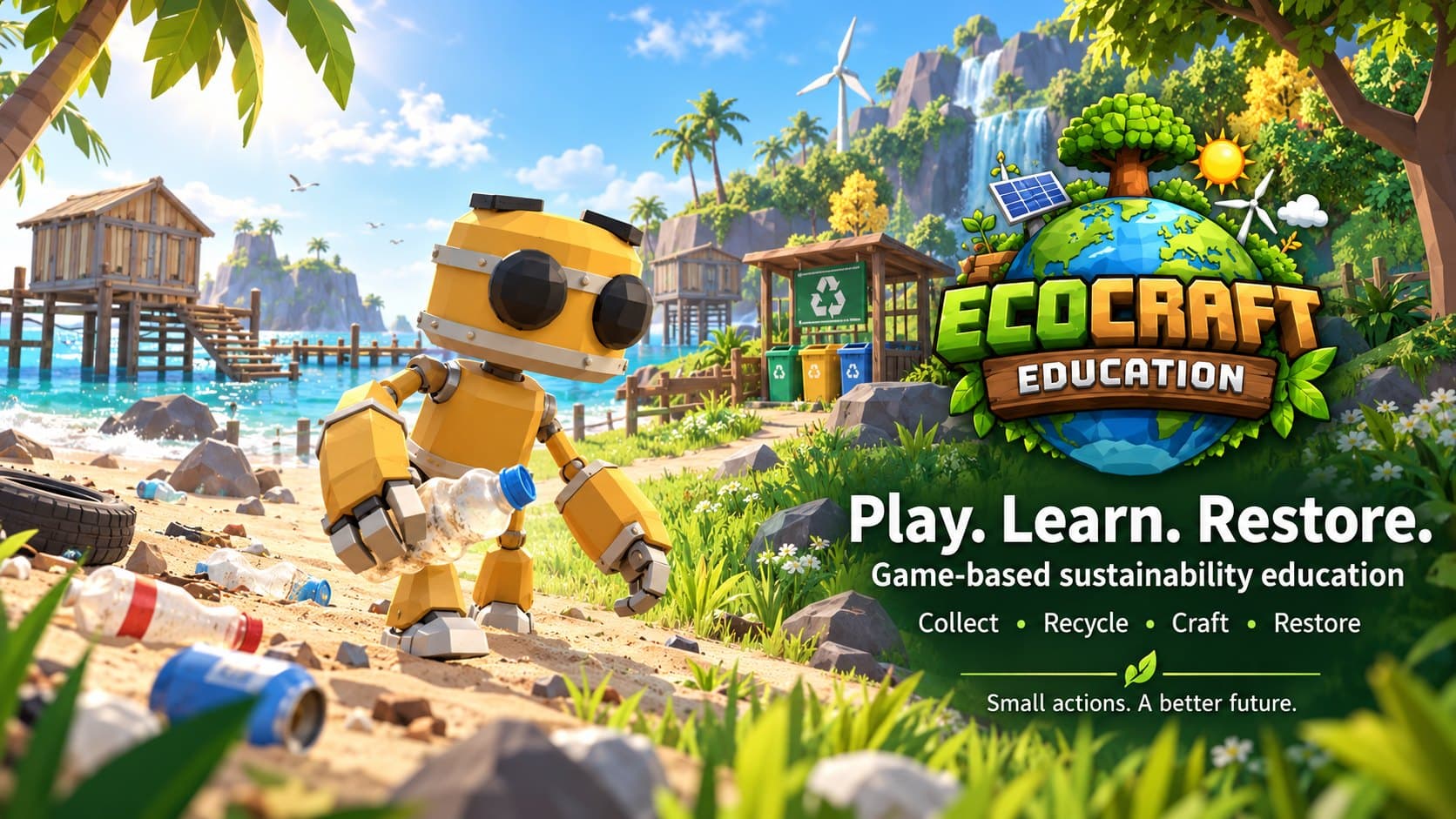
Built the core game and led product development for a sustainability education startup serving students ages 8–14. EcoCraft translates recycling, resource management, and ecosystem restoration into interactive gameplay, with a UAE-focused mangrove mission and a learning framework informed by the UN Sustainable Development Goals.
- category
- Product / Game development
- with
- EcoCraft
- year
- 2026
- role
- Product Development Manager & Game Developer
- tools
- Unity · C# · Playtesting
why this exists
EcoCraft set out to close the gap between knowing about sustainability and applying it. For students ages 8–14, concepts such as responsible consumption, resource circularity, and ecosystem protection need clear actions and visible consequences. The product challenge was to make those ideas understandable through exploration and decision-making while retaining the engagement of a game. It also needed to make sense as a school-facing educational product: accessible to younger players, relevant to the UAE, and designed around learning goals that could guide the mechanics and future content.
how it came together
- 01Led product development and built the core game in Unity and C#, translating the startup's educational vision into a playable foundation. Worked across game mechanics, interaction design, and implementation, balancing technical decisions with accessibility, engagement, and the needs of younger students.
- 02Structured the gameplay around an action-and-impact loop: explore an environment, collect discarded materials, recycle them into resources, and use those resources to build, repair, or restore. This loop connects progression to environmental decisions and gives the expanding crafting and mission systems a shared direction.
- 03Used a mangrove-restoration mission to ground the experience in the UAE's environment. Pollution, resource use, and ecosystem protection provide the setting for player decisions, connecting the broader UN SDG themes to a place students can recognise rather than presenting sustainability only as abstract information.
- 04Iterated on mechanics and the gameplay experience through student testing and team feedback. Used those sessions to inform refinements to the concept, features, and assets, keeping educational intent alongside usability and enjoyment as product decisions evolved.
- 05Developed the playable demo with keyboard and PlayStation controller support, giving students different ways to navigate the game. The demo established the core controls and visual environment, while further work focused on mission collectibles, expanded crafting, and story-driven prompts.
what came out of it
EcoCraft became a playable sustainability-game demo and a top qualifier in the INJAZ UAE National Competition. The team tested and presented the concept to children and shared it in external pitching opportunities, including HSBC. My contribution combined hands-on game development with product leadership: building the core experience and using feedback to shape its direction. The result is a foundation for a school-focused learning product, with ongoing development aimed at deeper missions, crafting, and narrative interactions.